
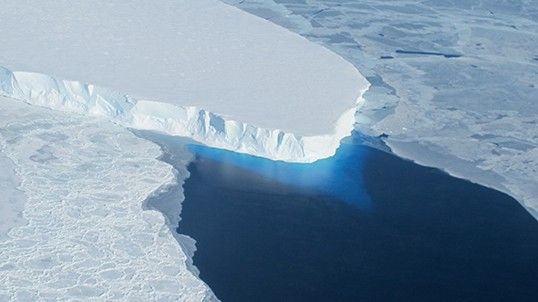
The tongue of the Thwaites Glacier. If it collapsed entirely,the structure would raise global sea levels by a potentially catastrophic amount (Picture: NASA/Cover Media)
Scientists have come up with a bold plan to halt the collapse of the so-called Doomsday Glacier and prevent sea levels rising disastrously – a 50-mile-long sea curtain.
The Thwaites Glacier,one of Antarctica’s most unstable ice masses,is edging closer to a point of no return,according to scientists.
It is already a major contributor to rising sea levels. If it were to collapse entirely,it could raise global sea levels by around 65cm,threatening coastal cities and low-lying island nations across the world.
Now an international group of researchers and engineers is backing an idea to slow that process: building a vast underwater curtain on the seabed off Antarctica to block warm ocean water from reaching the base of the glacier.
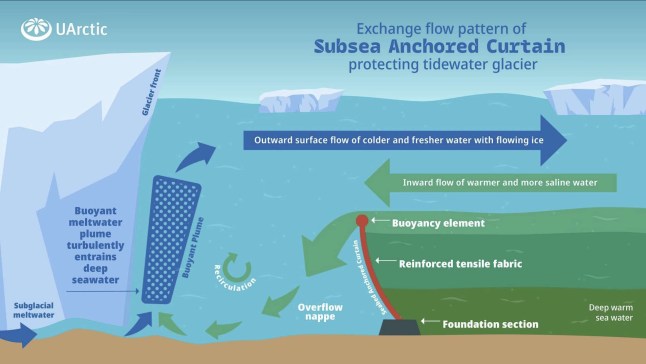
A diagram illustrating how the curtain would work,by keeping warm water away from the glacier’s base (Picture: The Seabed Curtain Project/Cover Media)
The proposal,known as the Seabed Curtain Project,would involve constructing a barrier more than 50 miles (80 km) long and up to 150 metres high,anchored to the ocean floor hundreds of metres below the surface.
The cost would run into billions of dollars and the structure would have to endure some of the harshest conditions on Earth.
Explaining how the project might work,the team behind,it said: ‘The Seabed Anchored Curtain project will limit sea level rise by creating barriers that would protect ice sheets from warm ocean waters that flow beneath the fringing ice shelves.
‘Spurred by the impending collapse of Antarctica’s Thwaites Glacier,this strategy will limit the access of warm water to the most vulnerable parts of ice sheets.
‘This could be possible as the warm,dense,bottom waters are within relatively narrow channels in the continental shelf.’
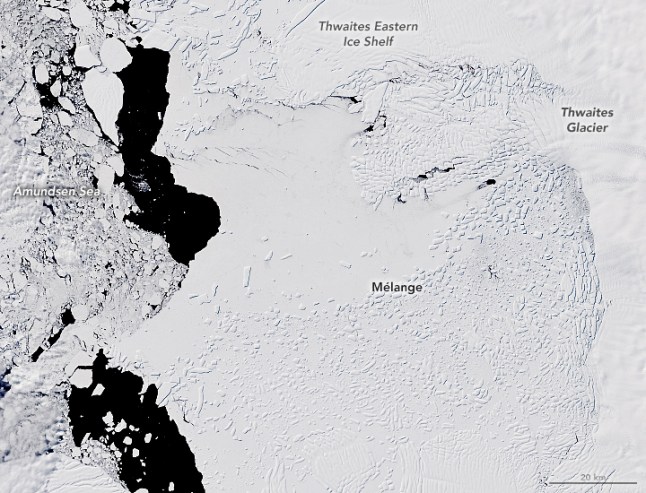
The Thwaites Glacier seen via satellite. It sits in Marie Byrd Land,an unclaimed part of West Antarctica (Picture: NASA Earth Observatory/Cover Media)
The Thwaites Glacier lies in Marie Byrd Land,an unclaimed part of West Antarctica. Roughly the size of Florida,it is the widest glacier on Earth and holds an immense volume of ice.
Over recent decades,warming ocean waters have been flowing beneath the glacier,melting it from below.
Scientists say the amount of ice flowing into the sea from Thwaites and neighbouring glaciers has more than doubled since the 1990s and now accounts for a significant share of global sea level rise.
Some estimates suggest the glacier could undergo a major collapse within decades.
The proposed curtain would sit across key channels on the continental shelf,limiting the amount of warm,dense water able to reach the glacier’s most vulnerable underside. Designs range from a continuous wall to a series of segmented barriers,intended to reduce strain from tides and currents.
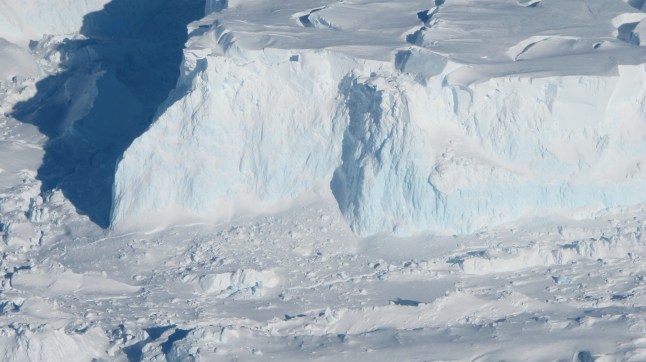
The Thwaites Glacier is one of Antarctica’s most unstable ice masses (Picture: NASA/Cover Media)
Supporters argue that,while expensive,the project would cost far less than repairing damage from unchecked sea level rise.
Funder Sasha Post,says: ‘Sea level rise is one of the most serious climate risks facing humanity this century. It is essential to accelerate research,like UArctic’s seabed anchor curtains project,to evaluate how to safely manage this risk.’
The project remains at an early research stage. Its leaders stress that no construction in Antarctica is imminent. However,mooring stations have been placed in the nearby Amundsen Sea to gather data that could help the team determine whether their plan is feasible.
To that end,researchers are also studying fjords in Norway and the Arctic archipelago of Svalbard,where natural landforms already restrict the flow of warm water.
Small-scale seabed barriers may be trialled in Norwegian fjords later this decade to assess engineering feasibility and environmental impacts.
Any intervention near Thwaites would also be sensitive geopolitically. Antarctica is governed under the Antarctic Treaty System,which promotes peaceful scientific cooperation and bans military activity and mining.
© Bitcoin Telegraph